Monday, June 13, 2016

African Gardening For Life: Repatriation Project


Agriculture means more than Subsistence farming... With agriculture, young people can explore career options in Permaculture design, Bio dynamic farming, Communication technologies, Forecasting, Marketing, Logistics, Quality assurance, Urban agriculture projects, Food Preparation, Environmental Sciences, Advanced technologies and more. Farmers, businesses, policy makers, and educators need to promote agriculture as an intellectually stimulating and economically sustainable career and make jobs in the agriculture and food system for young people in Sub-Saharan Africa. By Farmer Kiama Robert ,  Nairobi, Kenya


African Gardening For Life 


Square Foot Gardening 101 


Square Foot Gardening (SFG): Growing More in Less Space


Want to grow beans and/or peas, you will need a trellis? As these plants grow up/vertical.  

Trellis for Square Foot Gardening


How to put a trellis on a Square Foot Garden


***Special Article***

http://www.realfarmacy.com/growing-food-rigged-system/


Gardening for Life By Wayne & Connie Burleson Ways to triple your food garden production Square Foot Gardening GO WILD! Ideas to Work Less and Grow More Long Box Gardens


2. Why Grow Your Own Food? The E.A.R.T.H provides the answer E= To capture free sunlight ENERGY A= To help ALLEVIATE world hunger problems and help improve your family’s nutrition – save lives R= To make use of you own local RESOURCES T= To save TIME, money and less TRANSPORTATION H= To grow your own HEALTH This method is based upon:Healthy soils produce - healthy plants - produce healthy people All done with very little money, & with work less to grow more


3. Class Outline You can do it!• Introduction Class introduce themselves• WHY SMALL GARDENS WORK?• Prove it!• Ownership, purpose• Soils/compost (the foundation to success)• Garden designs, location, layout, construction, shade trees, drainage• Starting seeds, transplanting, controlling light, temperature, water• Planting and plant spacing• Garden care: watering ideas, weed and pest control, shade hoop houses• Which vegetable to plant


4. WHY SMALL GARDENS WORK? … Planting seeds for those in need …• Small gardens are very easy to assemble and they draw crowds• Simple. Anyone can do it. Anywhere in the world• Requires very little water (safe to use waste water)• Gardens are constructed without money or commercial fertilizers• Very easy to take care of (less work, less weeds, less water, more food)• Highly productive from very small spaces• Can produce 45 kilos (100 pounds) of food from a 4’ X 4’ area• Each home can construct several of these handy small kitchen gardens• Literally help feed millions of people• Also an evangelistic outreach – presents an opportunity to share the good news• Empty stomachs have no ears These gardens are sustainable, lifetime, hand-up endeavors, not a hand-out


5. Prove it!!!!!!


6. This one box is 4’ by 8’ (122cm by 244cm). It has 32 carrots per square foot = (32 carrots/sq (times) 32 square feet box = 1,024 carrots)


***Recommended Read***


Whether you live on a small suburban lot or have a many acres in the country, this inspiring collection will empower you to increase your self-sufficiently and embrace a more independent lifestyle. A variety of authors share their specialized knowledge and provide practical instructions for basic country skills like preserving vegetables, developing water systems, keeping farm animals, and renovating barns. From sharpening an axe to baking your own bread, you’ll be amazed at the many ways learning traditional skills can enrich your life. 


 Whether you live on a small suburban lot or have a many acres in the country, this inspiring collection will empower you to increase your self-sufficiently and embrace a more independent lifestyle. A variety of authors share their specialized knowledge and provide practical instructions for basic country skills like preserving vegetables, developing water systems, keeping farm animals, and renovating barns. From sharpening an axe to baking your own bread, you’ll be amazed at the many ways learning traditional skills can enrich your life.


***Recommended book***

A comprehensive, no-nonsense guide to kitchen gardening on any scale.

"Filled with rich illustrations and photographs, this book will appeal to a wide range of gardeners, making this a useful book for all types of public libraries."
--American Reference Books Annual 2012

"Gianfrancesco's easy-to-understand-and-follow guide provides clearly delineated, step-by-step, fully detailed and remarkably informative instructions for growing an exciting spectrum of edible plants."
--Booklist

How to Grow Food is a complete, illustrated guide to the hundreds of plants that are easy to grow in the home garden. The author emphasizes gardening techniques that can be applied to any size of garden, from a window box to a small side yard plot to the biggest backyard.

This practical book features a comprehensive directory of more than 125 crop plants, from traditional choices to more unusual varieties, to suit all growing conditions in all regions using simple organic and biodynamic gardening methods. Gardeners can choose from roots and tubers; leafy crops; seed and fruit crops; grains; peppers and chilies; stem and flower crops; tree fruits; soft, bush and cane fruits; tender fruits; nuts; herbs; and edible flowers.

How to Grow Food features thorough instructions and a month-by-month calendar of tasks, plus:

Types of gardens and choosing the best site
Designing, preparing and planting a productive garden
Maximizing the use of space, such as vertical planting and fruit cages
Harvesting, storing and preserving
Training and pruning plants for maximum yield
Tools, pests, weeds and growing from seed
Helpful dos and don'ts
Plant ratings related to variety, value, maintenance and season
The author's special selection of star plants.

 https://www.amazon.com/How-Grow-Food-Step---step/dp/1770853170/ref=sr_1_1?ie=UTF8&qid=1466727458&sr=8-1&keywords=how+to+grow+food


7. 70 Days The success has started as these boxes held together in several torrential rainfall events (like several inches of hard rain in a matter of minutes). The miracle happened, for soil amendment we ended up using several sacks of old chicken manure mixed in with small wood chips that we added to each box. The native soils are mostly hard clay, which is a poor growing environment. The wood chips became a surface mulch and held the soil in place during the wind driven downpour. Strong mulching is a great aid for any gardening efforts in the tropics. We thank the Lord.


8. The wood chip mulching protected the soil surface from rain drop impact This is especially on sloping on hillside gardens


9. Success in Africa A Church Demonstration Garden Small Village in Rwanda, AfricaGrowth in 61 days


10. Begin with the end in mind salsa, guacamole, chips


11. Economics of the Long Box Long Box 4 by 40 = 160 sq foot Each 40 days cut 3 bags greens 3 bags X 160 = 480 bags of greens Each bag sells for $3.00 $3.00 X 480 bags = $1,440.00 For a 40 day crop Then you replant the Long Box The potential for 4 crops/ year = $5,760 Gross Income in US$


12. Teaching with photos helps


Three types of soil 


Different types of soil


How to test soil Ph levels?


Do it yourself soil testing?


What is Mulch? 


How to make Mulch? 


How to make mulch from leaves?


How to mulch a garden bed?


13. Step #1 Soils/compost (the foundation to success) How to make your own Top Soil Go On a Treasure Hunt - Searching for Hidden Resources Step 1 Walk-about looking for then bag up the following? •Old dry livestock dung •Leave mold •Black looking top soil under bushes •Old dry chicken manure •Anything looking like dark soil Step 2 Dig up sod from garden plot 1.3 meter by 3 meters, and then remove old plants and root for plot African Cow House = decomposed organic matter Mix with native soil which makes great topsoil


14. How to Make Good Compost Ingredients needed: Why compost? Compost is decomposed organic matter that has turned into black colored humus that is called “black gold.” Compost makes excellent organic plant food. Millions of micro-organisms digest (eat) the dry grass and green grass causing the pile to heat up. Compost does not feed the plants directly. Instead it feeds the soil microbes which in turn release insoluble minerals for the plants to feed upon (fertilizers). This amazing process makes your garden a sustainable food factory - if you keep adding compost to your soils. Repeat all layers until 1 Meter high Add small amount of wood ash Add water to dry layers  Vegetable waste ------ Thin layer old manure - Thin layer top soil----- Green grass 30 cm --- Dry grass 30 cm---- Bottom layer maze for air ->


15. Step #2 Garden Construction; Garden location; Raised beds 2.64 Meters 1.32 Meters


16. Step #3 Planting/plant spacing Why have a grid?


How to grow food in Winter?

Three ways. 


How to grow food in the snow? 


17. How to Precisely Plant Your Seeds Take your time For 1 or 4 plants and plant each per square make a seed correctly small dish shaped for good success depression in the soil and place the seeds in the center. Water only where the seeds are located Mr Brite 16 Plants Mr Brite 30 Plants 9 Plants 4 Plants 1 Plant Per Per Per Per Per Square Square Square Square Square33 cm 33 cm Pea Lettuce These Tomato Radish Pepper Onion Seeds Beet Swiss chard Plants Carrot Broccoli Can also Cabbage Green Bean 1.5 cm deep Onion Sets Marigold Be started Onions 2 cm deep Spinach from Cucumber 1.5 cm deep Transplants Cantaloupe Small 2.5 cm deep 2.5 cm deep Carrots Potato 8 cm deep 1 to 2 cm deep


18. Steps to make Crops in Small PlotsStep 1 Research which vegetables is there a demand for in your area and at what time of year Come up with a list of marketable vegetables that you could grow & sell.Step 2 Plan your harvest according to the market … hint: Have your crop ready before other people offer the same vegetables. Also think about adding value like cooking.Step 3 Construct several raised beds and/or garden boxes with in your water limitations. Fill each area with your best soils & compost to at least 12 to 24 inches (30cm to 60 cm)Step 4 Plant each raised bed with the correct plant spacing and timing for the marketStep 5 Harvest early when vegetable are young and prime. Hint: Share and/or trade for your other needs. A Garden Box First planting Second planting Third planting Seed different block areas within a raised bed at different times for multiple harvests.


19. Which vegetables seeds to plant Tomato Pepper SquashCucumber LettuceSwiss chard Radish Beet Cabbage Spinach Carrots What do you love to eat? Beans


20. Step #4 Garden care:Water, Weeds, and Ownership


21. Wise water use


22. This lady in Shone, Ethiopia, Africa is a very good gardener as she knows how to place valuable water on each seed zone, which saves her much labor - hauling hard to acquire water for her garden. Re-cycled Water Ladies washing dishes and clothes in Malawi. Look where the water is going! Question:Could you dump this waste water safely on a small kitchen garden?


23. Why Add Mulch to Your Gardens Don’t let your soils see daylight Mr Brite One smart farmerCool shaded soils = 22 deg C (72 deg F) = holds water, Adds soil nutrients and slows weed germination Hot bare soils - 55 deg C (130 deg F) = evaporates water fast, Cooks and kills valuable microorganisms, no added soil nutrients and weeds can germinate


24. Don’t Weed Instead Cultivate


25. Step #6 Vegetable harvest and replanting


26. Add a scoop of compost and replant harvested squares


27. Worms provide fertilizersTHEIR WORM CASTINGSAND they work for free


How To Make Compost 


28. 12-Day Compost To use as fertilizeSpread completed compost around the base of your plants


29. When you keep your soils healthy and look what can happen One Radish growing in Ethiopia


30. One Radish makes a great salad Seeking information outside the box Radish leaves have 3 times the nutrient value as the roots And taste great!


31. Think Holisticallyfrom seed to stomach


32. A Life Giving StorySalmon River Pumpkin (A Winter Squash) From Seed to Seeds


33. Seed saving techniques Beets Cucumber Biennial as it takes Let ripen past two year. Store roots Pumpkin edible stage and for several months, Cut ripe & mature Spinach turn yellow. Cut Pick out the strong replant to grow pumpkin open. lengthwise, scoop plants and let them bolt seeds, harvest seeds Remove seeds. seeds out seeds into a flower stalk and when dry. Wash with water. and dry go to seed. Pull the seed Place on screen or stalks out of the ground cloth to dry. and let dry. Thresh the seeds into a container. Pepper Let ripe to full Onion color, no sign ofLet a few plants disease.form round Remove seedflower clusters. off core andWhen dry, pick place on screenand thresh the or cloth to dry.seed out. Lettuce Allow plant to bolt, Tomato to form a seed stalk. Pick ripe Cover to protect tomatoes from from birds & rain. several plants. Harvest seeds for 2 Squeeze seed to 3 weeks. This will out, wash and require repeated spread on cloth harvesting. to dry. Certain plant varieties will cross-pollinate with other members of their same family. If you are raising your own pure seeds, only plant one variety within that family. Visit www.seedsavers.org for more information


34. Sharing the harvest and teaching others


35. Gardens open the doors to teaching others & building life giving skills


36. Closing YOU CAN DO IT!Planting seeds for those in need


Planning Irrigation of Your Garden


The Incredible Self Watering Pop Bottle Garden Grow System! You Got To See This!


37. Gardening for Life By Wayne & Connie Burleson“Planting seeds for those in need” A Humanitarian Effort


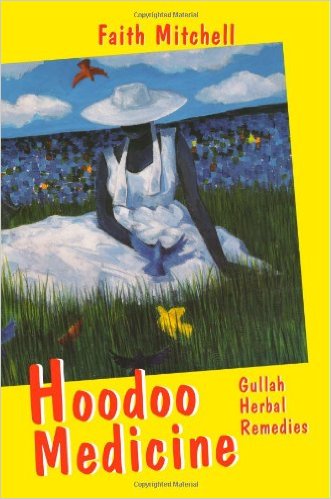
Want to heal yourself and family naturally? Then try Gullah Hoodoo Medicine by Faith Mitchell


Faith Mitchell earned her Doctorate in Medical Anthropology in 1980 from the University of California, Berkeley.  She is the President and CEO at Grantmakers In Health. Formerly, Mitchell was a senior staff member of the National Academy of Sciences in Washington, DC, the Senior Coordinator for Population in the Bureau of Population, Refugees, and Migration in the US State Department, and a program officer at the Hewlett and San Francisco foundations.


Buy the book now


 https://www.amazon.com/Hoodoo-Medicine-Gullah-Remedies-Revised/dp/1887714332/178-0735486-9494140?ie=UTF8&keywords=hoodoo%20medicine&qid=1438573697&ref_=sr_1_1&sr=8-1

If you want to purchase gardening equipment, high quality, and have shipped to you for free, then go to www.gardeninggiftsformother.com Any order over $35.00 gets shipped free via Amazon. This can reach you almost anywhere in the world. So if you want to set up a community garden and need to know what you need to get going then check our quick list. This list is designed to help you get started quick with the right tools for the jobs. Tools, like irrigation systems, hoses, shovels, picks, wheel barrows, seeds,  mosquito repellants, paint to prevent wood root, how to plant what next to what, etc. 


 http://supportblackfarmers.blogspot.com/2016/04/farmer-john-boyd-jr-wants-african.html


 http://supportblackfarmers.blogspot.com/2016/04/farmer-john-boyd-jr-wants-african.html


How to Grow Food The Quick and Easy Way


Container Gardening for those with small space like Apartments


Still Updating! 

Follow the link for more info: 

15 Edible plants you can grow in doors. 


Three Sisters Method for Pots


***Good Video***


Follow the link.


 http://preparednessmama.com/growing-three-sisters/


Companion Planting Three Sisters Method


Companion planting has become more popular in recent years because it helps to maximize available garden space and provides a sustainable environment for better crop production.

The truth is companion planting methods have been around for a very long time. In fact, the Native Americans might be some of the earliest known gardeners to use companion planting.

They used a planting technique called “The Three Sisters Method“.

Companion planting with the Three Sisters Method is a wise way of using available garden space and maximize yields.

What Is the Three Sisters Method?

The Three Sisters Method uses three different vegetables – corn, pole beans and squash.

Each vegetable is interplanted together so they benefit one another while growing and producing fruit.

The corn stalk provides a climbing support for the pole beans to grow up, the pole beans provide nitrogen in the soil for the corn, and the squash creates a living mulch to block out weeds and to conserve soil moisture for the pole beans and corn.

They are known as the “sisters”. A trio that works in complete harmony.

How to Plant a Three Sister Garden

For best results using the Three Sisters Garden, you will need an area that receives full sun and large enough to create a mound of soil that is about four square feet.

Mound up the soil about one foot high and two feet wide.

Flatten the top of the mound to create a level planting surface. You can also use a raised bed for the Three Sisters method if you have poor soil or drainage.

If you plan to create more than one make sure they are at least four to six feet apart.

In the center of the mound, plant the corn in a circle with the seeds spaced about six to seven inches apart. Water the seeds well after planting and continue to water each day until the seeds have sprouted in a couple weeks.

A Few Weeks After Planting the Three Sisters GardenOnce the corn has reached a height of ten to twelve inches sow the pole bean seeds in a circle six inches outside of the corn stalks.

The pole beans should sprout in seven to fourteen days. Remember to keep the mound well watered during this time.

A week after the pole beans have sprouted it is time to sow the squash seeds. Sow six squash seeds in a circle that is about twelve to fifteen inches away from the pole beans. Keep the entire mound watered well and the squash should pop up in about a week.

Make sure to train the pole beans to begin climbing up the corn stalks. You may need to begin wrapping the pole bean vines around the corn stalks to get them going in the right direction.

In just a few weeks the squash leaves will begin spreading out, shading the area and keeping the soil cool and moist.

Companion Planting with the Three Sisters Method

Using the Three Sisters method for growing corn, pole beans and squash is a really fun, space-saving way to incorporate companion planting in your vegetable garden.


Basic Garden Tools List 


Want to know what gardening tools are and what ones you may need to do the job? 

Example:

Garden Spade:
This tool is a must have for digging soil, making holes or shifting soil from one place to another. Border spade and digging spade are primarily two types of garden spades used by most gardeners. People with weak arms or back looking forward to dig large amount of soil can opt for a border spade.

Hoe:
This tool is helpful in cutting weeds just below the soil’s surface in vegetable plots. It helps in killing weeds and slowing down perennial weeds. If you intend to preserve your plantation and its produce, then you should positively get this gardening tool.

Hand Pruners or Secateurs:
This tool is ideally used for pruning stems up to 19mm thick. Anvil and bypass are two major types of secateurs. Most people go for bypass as they are capable of getting into tight spaces with ease. Thanks to their amazing cutting action, they prevent various plant diseases.

Watering can:
Applying targeted water to seedlings and young plants becomes an easy affair with watering cans. Their gentle spray doesn’t harm the plants.

Wheelbarrow:
They can come in handy for taking composts or tools from one place to another in garden. You can also use them for transporting debris to the compost pit.

Hand shears:
You can get a pair of good quality shears to trim hedges or overhanging grass at the edges of lawn.

 http://www.gardentoolslist.com/

 http://www.gardentoolslist.com/

Have a large group project and you need lots of the same tools and would like to buy wholesale? Buy wholesale direct from China all types gardening tools, cheap, affordable quality. 


 http://www.everychina.com/m-different-kinds-of-gardening-tools?cpc_kw=different%20kinds%20of%20measuring%20tools&cpc_flag=c66082

 http://www.everychina.com/m-different-kinds-of-gardening-tools?cpc_kw=different%20kinds%20of%20measuring%20tools&cpc_flag=c66082

The Importance of Water/Oshun


Worldwide, the application of water and its managed use has been an essential factor in raising productivity of agriculture and ensuring predictability in outputs. Water is essential to bring forth the potential of the land and to enable improved varieties of both plants and animals to make full use of other yield-enhancing production factors. By raising productivity, sustainable water management (especially when combined with adequate soil husbandry) helps to ensure better production both for direct consumption and for commercial disposal, so enhancing the generation of necessary economic surpluses for uplifting rural economies.

Since the 1960s, global food production has at least kept pace with world population growth, providing more food per capita at generally declining prices, but at a cost to water resources. At the close of the 20th century, agriculture used a global average of 70% of all water withdrawals, and FAO estimates that global abstractions for irrigation will grow by some 14% by 2030.While this is a much slower rate than experienced in the 1990's, water scarcity stress is projected to grow locally and, in some cases, regionally, constraining local food production.

Improved agricultural water use in irrigated and rainfed agriculture will play a key-role in coping with the expected water scarcity stress. Improving water use or water productivity is often understood in terms of obtaining as much crop as possible per volume of water - "more crop for the drop". Money-wise farmers may prefer to target a maximum income per unit of water - "more dollars for the drop", while community leaders and policy makers may aim for maximum employment and income generated through the agricultural sector - "more jobs for the drop". Thus in a broad sense, increasing productivity in agriculture can result in more benefit for every unit of water withdrawn from natural water sources. However, the resulting shifts in agricultural water use require responses by governments to ensure the productive and sustainable use of the land and water resources upon which agriculture depends.


1. Ensure water supply for a secure and economically viable agriculture 
Agricultural water use is consumptive and irrigated agriculture will by necessity claim large quantities of water to produce food. However, water-saving technologies are available and can significantly reduce waste. Desalinized and waste water are recognised as non conventional water sources. Solutions for sustainable allocation of water among users have to be secured.

2. Build new approaches in agricultural water management 
Huge investments have been made to develop existing irrigation systems. However operation/maintenance and rehabilitation are under-funded in the public and private sectors. Reforming efforts include the institutional changes with the transfer of operation and maintenance responsibilities to water users' associations, and new cost-recovery approaches.

3. Build pro-poor and affordable agricultural water management 
Low cost and small scale options in water harvesting, irrigation and drainage are necessary for small rural communities, who may have to rely only on manual and animal power (e.g. treadle pumps).

4. Mitigation of environmental and health impacts of new and existing systems 
Poor irrigation and drainage have led to water loss and also to the spread of water borne diseases, waterlogging and salinization of nearly 10% of the world's irrigation land, thereby reducing productivity. Improved design and management of irrigation and drainage systems is a priority.


Importance of Water in Afrika

By 

Published on Dec 12, 2015
Elphas Were - Founder of KEYNET (Kenya Economic Youth Network) talks about the importance of water provision.

We caught up with him, on the sidelines of the first African Young Water Professionals’ and Fourth Biennial Young Water Professionals’ conference, in Pretoria, South Africa, November 2015 where he was presenting a paper 

Article by Elphas Were :


Kids in Africa- Importance of Water


Water Conservation Interview w/ Phil Yates in WBC Children's Peace Garden


Water Gardening 101


Small Water Gardens - How To Build


Best Plants for a Water Garden


How to build a Rain Garden
A rain garden is a garden which takes advantage of rainfall and stormwater runoff in its design and plant selection. Usually, it is a small garden which is designed to withstand the extremes of moisture and concentrations of nutrients, particularly Nitrogen and Phosphorus, that are found in stormwater runoff.


Very good template shows what to do

How To Create A Rain Garden In Your Yard with Senga Landscape Architect


Dew Collection/Rain collectors


Amazing techological advancement

Dew Collecting Greenhouses
Purpose: Cure drought stricken land and grow food in harsh drought affected environment


Rain Shower in a Tropical Greenhouse

Amazing! 


Poor Man's Dew Collector


How to collect dew for drinking water


Rain Water Collection Systems
This series of videos show how to set up and build a system to capture rain water. 


This Old House Rain Water System


This is a heavy duty system more for community garden growers

30,000 Gallons collecting system


15,000 Gallon Collecting System


600 Gallon Simple Rain Water Collection System & First Flush - Part 1


600 Gallon Simple Rain Water Collection System - Pump - Part 2


Low cost Rain Collection system

5 Dollar RAIN BARRELS 55 gallons to 1000 gallons - RAIN WATER COLLECTION & STORAGE


9 Best Rain Barrels


Rain Water Harvesting 

Rainwater Harvesting Basics (1) Brad Lancaster


Japanese Water Gardens


Drilling Water Wells
Educational video showing step by step, the processes of well drilling, well construction and equipment installation needed to provide a safe home water supply.


How a Water well is drilled 


Water well drilling costs per foot
This quote gives a U.S estimate but may be much cheaper in Africa or other nations

Water well drilling costs per foot vary by casing diameter. A 6 inch casing diameter is the current standard for domestic wells in Canada.
The cost per foot varies from as low as $36 per foot to $55 for standard 6″ casing. Sometimes there are extra charges for the annular seal, pitless adapter, stainless steel screen, pump test, well development ( to increase yield and to “clean up the zone” by: airlifting, jetting, surging, surge block, etc.), and the drive shoe. If there is a productive water well drilled and not a dry hole you will need to have a trench dug for the waterline and power. If you find a low production zone when drilling you may also need install a cistern which costs upwards of $2000 and have the well keep it full.
You will also need a water pump installed that is appropriately sized for the depth of well and gallons per minute. Most well drillers also have a minimum charge, usually around 100ft minimum which at $45 per foot would be $4500. Drilling a water well is a long term investment and most people are reluctant to drill without knowing if they will find water, and if so at what depth.
If you would like to find aquifer depth and yield (gpm), and make an informed decision of where to drill your water well give us a call at 250-788-9118

We have regular runs throughout BC and AB call us to see when we are coming through your area. Seismic Waterfinder will travel to almost anywhere, please give as much lead time as possible so we can come at the date that is most suitable for you. If you need a high production water well for irrigation, or a domestic water well for your acreage, we can help you.


Want to drill the well yourself, you and your team?

DIY Water Well Drilling (Off-The-Grid Water Supply)


Off Grid Water: How To Find A Spring Or Seep


How to Make a "Water Ram" off-grid Water Pump, requires no electricity


CHEAP and EASY, Emergency Well Pump Requires No Electricity


Our 100% Off Grid Gravity Water System


How to make Water wheels 

Note: Mosquitoes usually come with slow moving water but a water wheel can speed up the flow of a created stream. 


Water Wheel Farming
Talking of Irrigation! 


Water Wheel Science Project

Try build it yourself to understand the concept


Water Wheel building for large community groups with finacing


Purifying water
Here is a secret little way to purify water using a simple food grade plastic water bottle. This method is approved by the WHO (world health organization) and is in use in many countries around the world. Uses sunlight and UV rays to pasteurize the water and remove water borne parasites and viruses


Demonstrating how you can use a food saver type vacuum bag to purify 11.5 gallons of water using the SODIS water purification method. Bag should be filled with clear water and placed in direct sunlight for 6-8 hours. This method uses UV "ultra violet" light to kill bacteria and viruses in the water. This method will do noting for chemical contamination.


This is a whole home water filtration and purification board I built to purify rainwater. Enjoy:)

Below are the links where I purchased some of the items in this video.

The uv light system I purchased from freshwater systems.com, I had a horrible experience with the company and staff. Do your research before purchasing, A attorney was needed in order to resolve my issue. Freshwatersystems.com did not want to replace the uv light that was delivered BROKEN! 

2 pin battery quick connect -https://www.amazon.com/Battery-Tender-081-0069-6-Terminal-Disconnect/dp/B000NCOKZQ/183-7346297-0339751?ie=UTF8&psc=1&redirect=true&ref_=oh_aui_detailpage_o07_s00   .

Doulton Rio 2000 whole house water filter with 6 Ceramic Sterasyl Filters - https://www.amazon.com/Rio-2000-Ceramic-Sterasyl-Filters/dp/B000VDTJ7G?ie=UTF8&psc=1&redirect=true&ref_=oh_aui_detailpage_o06_s00

3/4 Inch Rusco Spin Down Separator Sand / Sediment Water Filter 20 GPM - https://www.amazon.com/Rusco-Separator-Sediment-Water-Filter/dp/B00B8XDA46?ie=UTF8&psc=1&redirect=true&ref_=oh_aui_detailpage_o07_s00

Rusco FS 3/4-1000 3/4" 1000 mesh screen. - https://www.amazon.com/Rusco-4-500-500-mesh-screen/dp/B0014C5D3W?ie=UTF8&psc=1&redirect=true&ref_=oh_aui_detailpage_o08_s00


Make A Water Filtration System Clean Water Science Lab Demonstrated

This is a demonstration of the clean water science lab I recently purchased. It teaches you the basics of water filtration and purification. There are multiple experiments in the box. For today I am trying out the water filter.

This is the same principal used by the large water treatment plants in the city.


You can use this idea to make your own clean water filter for your off grid home.


11 REASONS WHY EARTHSHIPS ARE THE FUTURE


First Earthbag House at Manimutharu, TamilNadu, India


The $500 House - Build A House Dirt Cheap? (Part 1 of 4)


The $500 House - Build A House Dirt Cheap? (Part 2 of 4)


The $500 House - Build A House Dirt Cheap? (Part 3 of 4)


Earthship : Strange and Alternate Homes - Episode 2 Eloy, AZ


Earthships are the 21st century’s  100% sustainable homes that offer comforts like no other green building style you have ever seen! They are the modern way of living  cheap and in harmony with nature. Here are 11 reasons why Earthships are so amazing:

1. GROW YOUR OWN FOOD!

The Earthship is equipped with 2 greenhouses that can grow crops through the whole year! That means that no matter what the climate is, you can eat vegetables and fruits for free by growing them in your own house. If you need meat or eggs, you can also build a chicken coop into your Earthship. A fish pond is also a great option for the seafood lovers!


2. CHEAP ENERGY!

You can use renewable sources like solar panels and wind turbines to provide all the power your home needs. That is, of course, if you’re not the senseless consumer modern society taught you to be.


OLYMPUS DIGITAL CAMERA

3. SUSTAINABLE WATER SYSTEM.

Whenever it rains, the roof of the Earthship collects the water in a cistern, which then distributes it to sinks and showers. The used ‘gray water’ from the sinks and showers is then pumped into the greenhouse to water the plants. At this point water is cleaned by the plants and it’s ready for use again– that’s why it’s pumped back to the bathrooms for the toilets. After that the water from the toilet is pumped to the outdoor garden to give nutrients to non-edible plants.

4. A SECURE SHELTER FOR ANY WEATHER.

Earthships are adapted to any kind of climate– no matter if it’s freezing cold or  hot like hell, Earthships sustain a constant temperature of around 70 degrees Fahrenheit  (22 degrees Celsius). The secret is in the structure of the building– tires filled with dirt or ‘thermal mass’. Through this method, solar power is being absorbed and can also be released depending on the interior’s temperature. In order for the sun to heat up the thermal mass, the large front windows of the greenhouse should be facing south.

5. NO BILLS = FREEDOM.

Having all those basic necessities for free brings us to the next huge advantage– you’ve freed yourself from the modern form of slavery! You no longer need to work in order to survive– no more wasted valuable time! You can fully concentrate on the things you love doing and on improving yourself and the world around you. The only responsibility you’ll have will be to take care of your greenhouse and Earthship, which is totally worth it! Imagine the world we’d live in if everyone had that much free time to do the things they truly love to do instead of working jobs they don’t even like!

6. BUILD YOUR OWN ONE!

This can be done surprisingly fast even by an amateur builder! A fine example of that is a married couple, who built  their own 3-story Earthship by themselves in 3 months. They both had no experience in construction and managed to build their green home using only printed schematics. No workers were hired nor were the costs for equipment high. If a couple in their forties can do it– anyone can, too.
Read: The first completely sustainable island is in Scotland

7. CHEAP

Earthships are pretty cheap compared to universal houses. They vary from 7,000 to 70,000, depending on whether you want an average or a huge one. The price fits buyers from all social classes.

8. SUSTAINABLE AND TRENDY.

Most people picture a primitive home that lacks the comforts the 21st century has to offer, when they hear sustainable or Eco-homes.  Take a look at these pictures and you decide if Earthships have anything to do with primitive or old-fashioned:


9.MADE OF BYPRODUCTS OF MODERN SOCIETY 


The basic parts of the Earthship are recycled byproducts– that’s the reason why they are so cheap. As I mentioned above, tires filled with dirt make up the structure of the Earthship. Used tires are pretty easy to acquire and there are places where they’ll actually pay you to take them away! Another example are the walls– they are concreted plastic and glass bottles. I’m sure you can find these and a lot of the other materials needed pretty easily in every urban environment.


10. OPEN-MINDED.

Earthships succeed in one thing for sure– encouraging people to think differently. They inspire us to build our human society in harmony with nature and not against it. What if we apply the sustainable model not only in our homes but in the world around us? What else can we make cheaper, more sustainable and Eco-friendly ?
Read: Sapiosexuality: Why Some of Us are Attracted Purely by Intelligence (backed by science, of course)

11. THE EARTHSHIPS CREW

The supporters and activists of the Earthships carry the same values as the Earthship itself. There are widely spread movements around the world that build sustainable homes in different countries. If you don’t want to live alone or build one by yourself, you can always contact such organizations and be a part of spreading the change!


Low Cost Greenhouses for Community Gardens

This Greenhouse could feed an entire community or provide a stable business for a family or group.

This Greenhouse was invented in Kenya, made entirely of natural material that is found in the local area. It only costs $600.00 to build. It lasts for 10 years! The space is huge. You will need a crew of 20 or so. Saws, ladders and gardening tools. Greenhouse sheets and mosquito net covering.


For small investors and small workforce.


This is the most affordable greenhouse you could ever build -- total cost even with everything store bought is about $225 for a 12X40 greenhouse.


 http://supportblackfarmers.blogspot.com/2016/06/rice-and-beans-survival-combination_16.html

 http://supportblackfarmers.blogspot.com/2016/06/rice-and-beans-survival-combination_16.html

Wednesday, June 1, 2016

What Would Motivate You To Build A Black Economy?

 http://supportblackfarmers.blogspot.com/2016/04/farmer-john-boyd-jr-wants-african.html


Dr. Umar Johnson - Blacks were forced to build Black Wall Street & Black empowerment


Monday, May 9, 2016

Agriculture and Land Development Invented By African Queen Mothers


 http://supportblackfarmers.blogspot.com/2016/04/farmer-john-boyd-jr-wants-african.html


The Lair of Bilikisu (Africa Documentary)


African agriculture: Zambian women's clubs boost food security


'Womb Envy' and the 'Devalued Man': How Women Invented Agriculture and Men Have Punished Them For It Ever Since


By Craig White
December 26, 2001
Email  Print
FacebookTwitterShare
"The Birth of the Myth That Men are Closer to God" is the title of an article carried recently in The Washington Post, written by Robert McElvaine, a professor of History at Millsaps College in Jackson, Mississippi. It starts out more or less about the Taliban, but it quickly moves on to that much more dangerous movement, the Religious Right in America (well, he says Judaism and Christianity, and appears to mean any traditionalist interpretation of either).

While McElvaine's piece purports to explain religious "myths" about men and women, to my mind he, as a believer, retells one version of our official modern myth. The article is all the more appealing as a result: myths are fun, and McElvaine retells a good one, with feeling and gusto: the story of how women invented agriculture. (As they taught us in school, a myth is a story set in the distant, unverifiable past that explains some feature of our lives, right? (And it would be really hard to verify who invented agriculture!)) So, according to this recently conceived myth, long ago, men were hairy, violent, and stupid, and inordinately (and foolishly) proud of their superior hunting skills. (Women painstakingly and non-violently gathered seeds and roots, while men killed mastodons.) Then, women (being superior mentally, as they still are) began noting, in a creative leap, the connection between seeds in the ground and the plants that sprang up later. Cleverly, they began sacrificing some of the seeds they gathered, placing them in the ground, and some months later reaping the results. Soon they were providing more food than men. Feeling that their hunting role had been "devalued," the men were jealous! (The explanatory power of this myth is obvious already.) At this point, in their jealous rage, men wickedly made the false deduction that the male role in human reproduction was like the female (or later, human) role in agriculture: planting the seed in the ground, which only provided a warm, dark, wet place for the seed to grow. Male jealousy (which persists to this day), made men assign this creative element to themselves, leaving women, dirt-like, to provide nothing but a place for the seed to grow. Additional male revenge for being driven from the joys of hunter-gathering to the sweat of agriculture with sticks and hoes included the assigning of creative powers to male gods, even though "earlier" stories referred to "Mother Earth and to nature as a feminine force." (I had a little fun with my own summary, but I think the elements of the story are there as McElvaine told it.)

It's an engaging myth, with some intriguing explanations of how the modern world came to be! If only it had been presented as a myth, so more people could enjoy it as such! As science, it's devoid of any scintilla of evidence, which might cause some people, not realizing its proper value as an amusing myth, to dismiss it. A shame. Even as myth, however, I have to question some of the details. For example, if the invention of agriculture led to the notion of impregnation as planting a seed, did early people really think of Earth as Mother, but not of Sky as Father? Didn't the earlier stories (if they really were earlier) about Mother Earth suggest that She got impregnated by Father Sky? The clouds and rain and the lightning bolts and all that? (No rain, no growth.) Wouldn't that imply that fertility was seen, from the earliest days of the "Mother Earth" paradigm, as a collaborative effort, with an important male contribution, rather than a purely female quality? Moving forward in mythical time, if the invention of agriculture led to these "creative male" myths that devalue women, why do we have goddesses of earth and harvest getting sacrifices from the oh-so-patriarchal Greeks and Romans? In both theory and practice, they seemed to believe the female contribution to fertility was extremely important. But that doesn't fit too well with the myth at all. Anyway, isn't Earth, rather than a degrading comparison, a rather natural, benevolent, even majestic metaphor for woman as reproducer? After all, anyone can see that the great, beautiful earth gives us life. How? A seed goes in, and then there is quiet, mysterious growth for months, hidden from view, growth that never occurs with a seed on a shelf or in a jar. Finally, new life springs forth. That's a degrading comparison? And, in the end, let's not forget it's a metaphor. If women are Dirt in this kind of story, are men violent, senseless, ephemeral airheads, as they would be if the thundercloud image is taken as literally as the Earth image? Maybe the Mistaken Metaphor of Woman as Dirt has been pushed too far as an explanation for men feeling superior.

Now I come to Genesis, in which, McElvaine asserts, the Fall is women's discovery of agriculture. It seems odd to me, if the Genesis creation story makes women dirt-like, that the story does not simply portray woman as created from dirt. In fact, the Genesis story makes woman the last and most refined product of creation, "Human 1.1″ as it were. The “dirt woman” theme he reads in Genesis (as elsewhere) would work far better if woman were made next to last, from dirt, and Adam were made from Eve. That way, she would be closer to dirt, and he would be the refined one, the final product. Since it's the other way around, the effect is quite spoiled. It also seems to me that McElvaine goofed on a rather important verifiable detail. This professor of history asserts baldly that “in many languages, starting with Hebrew, woman means “out of man.” I wish he would name one language other than Hebrew, for in that language, "ish" is man, and "ishah" is woman, according to my Bible footnotes. Sounds more like the feminine form of the same word, to me–I believe it's simply the standard Semitic ending for a feminine word. Genesis actually says nothing about the meaning of the word, it simply quotes Adam as saying, "She shall be called woman, because she was taken out of man." I’ll believe McElvaine's "fact" about the "many" other languages when I see them cited, in a dictionary.

I don’t mean to say, in all my McElvaine bashing, that there’s nothing to “womb envy.” The fear and envy of women are real, I believe, and based on reality, not modern myths. Women have the power, not only to bring forth children, the most astonishing and worthwhile talent there is in a world where we all die (and creative, come to think of it), but they shape the children in a way fathers can only do with extraordinary care and investment of time. At any given time, they really do hold the future of the world in their hands, despite the patronizing males who spring up in every generation. And, they are tough in some areas where men are jelly. (And they are often deeply good in areas where few men score any points at all.) I think Camille Paglia has some very interesting things to say on why men fear women, and on the relations between the sexes. If you want deep, chthonic stuff about where male fear comes from, try Paglia. It's better written, too.

McElvaine has other serious points besides explaining why men are jealous. At one point he says,"Women can do all the important things men can, but there are some essential things that women can do that men cannot: bear and give birth to children and nourish them from their bodies." Pardon me, but doesn't that first phrase beg the question? What are "all the important things men can do"? Maybe he never saw a big, international-level mixed doubles tennis match. Seriously, maybe he's forgetting the fact that physical strength made an undeniable difference in your chance of survival in battle until very recently, and still does, for all we know–there's never been any test of the hypothesis that a group of women could carry off a modern battle. Perhaps McElvaine never read Michael Levin's Feminism and Freedom, or Goldberg's The Inevitability of Patriarchy. String me up: just as I really think women, on average, do some things much better than most men (and not just having babies), so I actually believe that men, on average, do some things better than most women. Now, I have recently developed more appreciation than I used to have for the argument that war is an ugly and destructive occupation–I'm more or less with the feminists on that point. But if my country actually has to be defended, I'd rather have men on the front lines doing it. And I suspect that all the stories of risk-taking male entrepreneurs and daring male traders are not lies cooked up by the patriarchy. I've nothing against women proving themselves in any field of endeavor whatsoever, but the assertion that "women can do all the important things men can" is an unqualified and meaningless (but very politically correct) assertion.

At one point McElvaine casually mentions Thomas Aquinas, as a kind of throw-away icon of male prejudice. He doesn't even provide an out-of-context quotation, just tosses in his name. That's interesting to me. I'm not a great Aquinas scholar, and I don’t know the quotes that enrage the feminists, but I know what Aquinas said to Muslims about polygamy. He said the end (telos) of marriage is friendship, but the condition of friendship is equality. However, the possibility of taking other wives, Aquinas told Muslims, destroys the possibility of equality in marriage, thereby keeping marriage from achieving its end, friendship. (Summa Contra Gentiles III, 123 and 124) Funny, he doesn’t sound like the Taliban monster he’s supposed to be.

In another sour note for me, McElvaine appears to take Atwood's The Handmaid's Tale as a serious warning for America. The premise of Atwood’s paranoid parable has always struck me as so bizarre that it makes an excellent litmus test for lunacy — anyone who takes it the least bit seriously has a tenuous connection with reality, at best. I once looked around at a group of "Promise Keeper" friends of mine and thought of Atwood’s parable. I had seen these monstrous males with their wives–being gently corrected, being teased, asking permission, seeking favor, having their very lives organized. The idea that this was the germ of an American Taliban movement was beyond hilarious exaggeration, it beggared belief.

Speaking of the Taliban, the proximate cause of McElvaine's piece, a friend just told me he read a book about the Taliban, and learned that the Taliban themselves said it was not that they did not want to educate women, but that it was not their priority, and they were afraid of foreigners corrupting women. They said they would get to it when they had time. It's a small thing, and it doesn’t make me a Taliban fan by any means, but it did make me ashamed that I had taken at least part of my view of the Taliban from CNN. Aarrggh! That's sort of like getting any part of your view of Yasir Arafat from Ariel Sharon. Or, perhaps, your view of anything important from the Washington Post, which apparently takes seriously half-baked myths from a History professor who states as fact that women invented agriculture and that "woman" in Hebrew means "out of man."

Tuesday, May 3, 2016

Women Own The Market-Join the Women's Merchant Club


The Dr. Martin Luther King Park Beautification Committee of historic St. Helena Island launched the new "St. Helena Community Market" in March of 2016.  This market operates from 10 am to 1 pm on the final Saturday of each month.


Will you help Queen Quet provide livelihoods for young girls and women who live in the Gullah Islands? The emphasis is placed upon girls because girls stay to their community, build and raise families, own homes and land, work jobs as well as turn to craft, marketing and businesses to provide a quality future for their children.Without strong women the culture of a people will wither and die. Did you know women spend more hours a week working than men? Sometimes, some women complain, but wise women know God made women stronger to meet the task of continuing life. 


The St. Helena Island Community Market is a place for women to instruct young women in making money. This money is used to circulate within the community, to pay taxes on land, support their husbands, pay for medicines, buy clothes and books for their children, even pay for higher education for their children. An urgent emphasis is needed on providing fresh, organic food and herbal medicine daily to our infants and children to produce a stronger and smarter generation. High unemployment among African American fathers has brought our communities circulation to a halt. This isn't the time for finger-pointing but taking a closer look at traditional wisdom, that says, "Women Can Lift Up The African Race". We have urgent need to get started today. This fast as lightning economic circulation vitally needed can only come from African American women. Its no small wonder Harriett Tubman was put on the $20 bill, the most spent bill, the future of economic status of Africans worldwide now depends upon the African woman. 

We're are asking specifically for the assistance of women of the African diaspora, and continent as well, to give $15.00 U.S dollars per month to help grow the St. Helana Island Community Market to full time like the ones in Lagos and Porto Novo. We would experience tremendous growth if the St. Helena Island Community Market grew into a 6 day a week operation.  A 6 day a week market will expand food growing operations, support greenhouses, build and maintain community shared gardens, provide entrepreneur opportunities for all sexes and ages, support education in traditions; like blacksmithing and engine mechanics for boys, clothing making and business ownership for girls, provide unique activities for special needs children, and assist the elders in their well earned retirement. How is the question and essential task we need to address to proceed. 

Suggesting 3 measures to remedy the solution. 

1. Mass donations from the public: All willful supporters can donate $15.00 U.S dollars per month to go into the general fund. This fund is personally overseen by Her Majesty Queen Quet and His Royal Majesty, Alase, Oba Adefunmi II. We only need to reach a 100 people and we got $1500.00 a month to pay bills such as electric, water and power for the market. However, the initial goal is to reach $100,000 people as stated in our original call in the Civil Corps proposal and Gardening Gifts For Mother program . This provides a hefty sum of $1,500,000,000 a month. Anyone can give from anywhere in the world. 

2.  Microfinancing beginning business owners who meet the qualification set forth by the women who rule the market. Women and teenage girls will be selected to advertise their business vision to receive loans from the women's merchant club. Men also can become supporters and members of the merchant club. Members of the women's merchant club will receive special deals, discounts, and will be mentioned in our annual supporters celebration. Supporters who would like to be become loaning partners can choose to support the woman and girl of their choice. The Gardening Gifts for Mothers programs allows Gullah women and girls to build assets so that they can stabilize their income, raise their standard of living, and reorient themselves and their families. Small loans given by members of the merchant club would bring big changes to impoverished women, who would use the money to begin or expand small businesses located at the St. Helena Island Market. Borrowers can use their loan money to grow and sell their produce, open small shops and beauty salons, and run dining operations.

3. Supporters who have been giving to the Gardening Gifts For Mothers program, via Amazon's Gardening section, we thank you for your continued support. To those unaware, the Gardening Gifts For Mother program, allows an unique opportunity for supporters to purchase gifts and send them to the farmers. Such as gardening tools, seeds, beans, rice, emergency kits, hand tools, irrigation systems, and a host of fine products that would start off well any garden. Choose from hundreds of gifts. Each gift is sent free as a apart of Amazon's Prime products. Yes, free shipping on all your gifts! So order now. Order again, and again. Thank you for your support. Here you can order: 

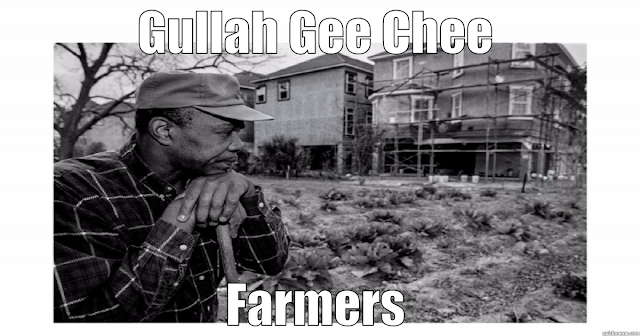
Your gift goes to support the food growing operations behind the St. Helena Island Community Market. The goal is to make profitable the Gullah Gee Chee Nation land and farming operations, also AAfin Farms of Oyotunji African Kingdom Village. You will also be supporting the continuation of African American culture that still contains the original African blood of tradition. Your every dollar will inspire not only just local Gullah people but other African Americans that live nearby and far away! This bold act by the few of us can change the attitude of our people not to give up and give in. A bright example is needed to chase away the darkness. You are the light. Give now! 


The rallying of women is the last and greatest call to unite all of African people worldwide as we prepare for 2063 set by the elders and leaders at the African Union. Agenda 2063 is a worldwide strategy to optimize Africa's resources for the benefit of all Africans. 

 http://gardeninggiftsformother.blogspot.com/2015/07/gardening-gifts-for-mother.html

THIS HOUSE BELIEVES THAT WOMEN ARE THE KEY TO AFRICA’S ECONOMIC FUTURE.

African Union Panel Calls for Greater Support for Women Farmers


 Africa is a continent with great economic potential. Foreign investors are competing to enter the market and invest. That potential however is only in part met as a result of the limited role of women in the economy. 


Currently one of the most important economic sectors in Africa is agriculture. It accounts for more than 32% of Africa’s GDP and it accounts for around 65% of Africa’s employment[1]. As the economy develops this preponderance is likely to decline as it has done in other countries as they develop but agriculture will still remain important for reducing famine and malnutrition.

The majority of the people working in the field are women. According to the UN Food and Agriculture Organization, women in Africa are responsible for 70% of crop production, 50% of animal husbandry and 60% of marketing. Women undertake nearly 100% of food processing activities, in addition to child care and other responsibilities in households.[2]


Agriculture both illustrates how women are vital to African future prosperity and some of the problems along the road to prosperity. Women in Africa have few rights; they can seldom own land, although they are working it, they cannot take loans from banks in order to invest, and many of them lack a basic education. Women own less than 1% of the African continent’s landmass. Only 51% of females over the age of 15 in Africa are able to read and write, compared to 67% men. It is estimated that this inequality reduces Africa’s annual per capita growth by 0.8%. If this growth had taken place Africa’s economies would have doubled over the last 30 years.[3]   


Women, therefore, might be considered to be key to Africa’s economic future. That is if the continent can overcome these inequalities to provide women with the necessary training, with rights and liberties to move freely in the market, to run their own businesses and make their own economic decisions. Women represent a pool of untapped labour. One of the biggest mistakes to be made in any economy is to misuse one’s factors of production. Time has come for Africa to start integrating women into the economy and to start maximizing their potential as future entrepreneurs.  


[1] ‘Fact Sheet: The World Bank and Agriculture in Africa’, The World Bank, 2013, http://web.worldbank.org/WBSITE/EXTERNAL/COUNTRIES/AFRICAEXT/0,,contentMDK:21935583~pagePK:146736~piPK:146830~theSitePK:258644,00.html

[2] Zerbo, Sandra, Olivier Beni, and Valérie Traore, ‘Everyday Heroes’, Trust Africa, 2011, http://www.trustafrica.info/documents/Everyday_Heroes.pdf


[3] ‘Gender and Economic Empowerment of Women’, Africa Partnership Forum Support Unit, Briefing paper no.3, September 2007, http://www.africapartnershipforum.org/39921766.pdf


Women are the backbone of Africa’s agriculture

POINT

It sounds dramatic, but when more than 70% percent of the agricultural labor force of Africa is represented by women, and that sector is a third of GDP, one can say that women really are the backbone of Africa’s economy. But the sector does not reach its full potential. Women do most of the work but hold none of the profit; they cannot innovate and receive salaries up to 50% less than men. This is because they cannot own land[1], they cannot take loans, and therefore cannot invest to increase profits.[2]


The way to make women key to Africa’s future therefore is to provide them with rights to their land. This will provide women with an asset that can be used to obtain loans to increase productivity. The Food and Agriculture organisation argues “if women had the same access to productive resources as men, they could increase yields on their farms by 20–30 percent. This could raise total agricultural output in developing countries by 2.5–4 percent, which could in turn reduce the number of hungry people in the world by 12–17 percent.”[3]


The bottom line is that women work hard but their work is not recognized and potential not realized. What is true in agriculture is even truer in other sectors where women do not make up the majority of workers where the simple lack of female workers demonstrates wasted potential. The inefficient use of resources reduces the growth of the economy.


 There is greater potential for African women
POINT
There is great potential in educating African women. Two out of three illiterate Africans are women. In 1996 the countries with the highest illiteracy rates in women are Burkina Faso with a staggering 91.1%, Sierra Leone with 88.7%, Guinea with 86.6% and Chad with 82.1% of women illiterate[1]. The situation is however improving. Women are starting to reach their educational potential: by 2011 the illiteracy rate among female youth (15-24) had dropped to 52% in Sierra Leone, 22% in Guinea and 42% in Chad.[2]

Women in Africa are becoming much better educated. This means they are much more likely to be able to reach their full potential in the economy. Education provides opportunities as educated women will be better able to work in the manufacturing or services sectors. They will also be much more capable of setting up and running their own businesses or organisations. As a more educated cohort of women enters the workforce they will have a much greater effect on the economy than women have had in the past.


 Women are the backbone of Africa’s agriculture
POINT
It sounds dramatic, but when more than 70% percent of the agricultural labor force of Africa is represented by women, and that sector is a third of GDP, one can say that women really are the backbone of Africa’s economy. But the sector does not reach its full potential. Women do most of the work but hold none of the profit; they cannot innovate and receive salaries up to 50% less than men. This is because they cannot own land[1], they cannot take loans, and therefore cannot invest to increase profits.[2]

The way to make women key to Africa’s future therefore is to provide them with rights to their land. This will provide women with an asset that can be used to obtain loans to increase productivity. The Food and Agriculture organisation argues “if women had the same access to productive resources as men, they could increase yields on their farms by 20–30 percent. This could raise total agricultural output in developing countries by 2.5–4 percent, which could in turn reduce the number of hungry people in the world by 12–17 percent.”[3]
The bottom line is that women work hard but their work is not recognized and potential not realized. What is true in agriculture is even truer in other sectors where women do not make up the majority of workers where the simple lack of female workers demonstrates wasted potential. The inefficient use of resources reduces the growth of the economy.


Let's celebrate the Intellectual Creativity of Women and Honor their Tutorship.


 http://supportblackfarmers.blogspot.com/2016/04/farmer-john-boyd-jr-wants-african.html

Saturday, April 30, 2016

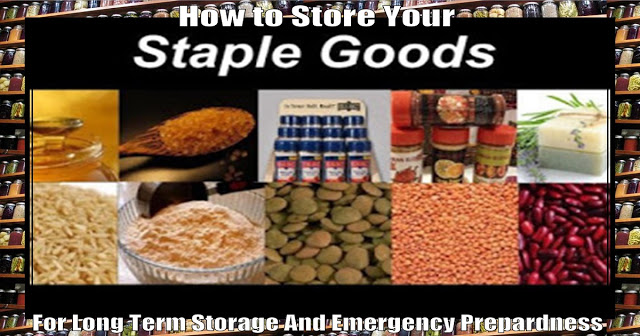
How to Correctly Store Your Food, Food Storage


12 Items you can store indefinitely that won't expire. 


How to Correctly Store Your Food, Food Storage Part I
Posted December 3, 2010


Survival Food Storage | Tags: food storage, how to can vegetables, how to store food, survival food storage, survival seed bank


If you have planted your survival seed bank and begun harvesting your own food, then you are well on your way to self-sufficiency and long-term survival. But obviously, your garden is not going to produce at all times of the year. And when disaster strikes, the garden itself may be destroyed. So if you are not putting food in storage correctly, then you are missing a huge element of emergency planning and survival.


Now, on to the basics.

How to Store Food


How to store in 5lb buckets


*Plastic buckets- Generally speaking, I use food grade plastic buckets to store all my dry goods. There is some controversy over whether plastic can be used to store food long-term. Before purchasing a supply of buckets, contact the manufacturer to ensure that they are intended for food storage and not chemicals or solvents. Restaurants use plastic buckets for food storage all the time, so if you’d like you can even contact a local restaurant to see if you can get some used ones for cheap or free. When filling a plastic bucket with dry goods, such as wheat, rice, or beans, stop periodically and gently shake the bucket to get the contents to settle. Fill it all the way up to within 1/2 inch of the top of the bucket. This will reduce the amount of air that stays in the bucket, and reduce your chances of spoilage.


*Oxygen absorbers- Before you start storing food, you should definitely order some oxygen absorbers. You can get 500 of them for just about 15 bucks. I place 3 or 4 of these in each 5-gallon plastic bucket that I use for dry goods. These are extremely useful, since foods that are stored without oxygen last much longer. The trick in to place the oxygen absorbers in the bucket on top of the food, then quickly nail on the lid with a rubber mallet to create a tight, leak-free seal and a partial vacuum. This leaves the food in an atmosphere of 99% pure nitrogen. A tip to getting your oxygen absorbers to last a long time before using them is to store them appropriately. Remember that once you open the package, they will start to absorb oxygen around them right away. Keep your unused oxygen absorbers in a glass jar with a tight-fitting lid.


How to store/preserve food in glass jars.


*Glass jars- For fruits and vegetables, you really can’t beat old fashioned canning in glass jars. Glass jars are cheap to buy, and easy to use and sterilize. You can refer to my blog A Good Reason To Can Your Own Vegetables  for links to sites that will guide you through your first canning experience. Once you have done it a few times, you will have committed the process to memory. You may find instructions online for refrigerator pickles, such as in my Lacto-Fermentation blog. It is important to note that these methods are for quick consumption, not long-term storage. Fruits and vegetables that you will to store for long periods of time must be canned using a heat process, or dried and vacuum packed.


1450 Seed Banks Available


3 items you'd never think of to stockpile for SHTF or Economic collapse


Plant Twist for growing stalk items/holding plants up etc.


 http://www.amazon.com/Plant-Twist-Cutter-Sturdy-Coated/dp/B00L8BSMYG/ref=as_li_ss_tl?ie=UTF8&qid=1435692338&sr=8-1&keywords=twist+tie+roll&linkCode=sl1&tag=tlh04-20&linkId=GODZV66T7WSEB7DA

(Enter) 


 http://www.hoodoomedicine.com/

Hoodoo Medicine is a unique record of nearly lost African-American folk culture. It documents herbal medicines used for centuries, from the 1600s until recent decades, by the slaves and later their freed descendants, in the South Carolina Sea Islands. The Sea Island people, also called the Gullah, were unusually isolated from other slave groups by the creeks and marshes of the Low Country. They maintained strong African influences on their speech, social customs, and beliefs, long after other American blacks had lost this connection. Likewise, their folk medicine mixed medicines that originated in Africa with cures learned from the American Indians and European settlers. Hoodoo Medicine is a window into Gullah traditions, which in recent years have been threatened by the migration of families, the invasion of the Sea Islands by suburban developers, and the gradual death of the elder generation. More than that, it captures folk practices that lasted longer in the Sea Islands than elsewhere, but were once widespread throughout African-American communities of the South.


 http://supportblackfarmers.blogspot.com/2016/04/farmer-john-boyd-jr-wants-african.html


 http://thecoconutrevolution.blogspot.com/2016/03/blog-post.html


 http://theriseofsodom.blogspot.com/2016/04/the-new-slave-mentality-scientology.html

Monday, April 18, 2016

Farmer John Boyd Jr. Wants African-Americans To Reconnect With Farming


Farmer John Boyd Jr. Wants African-Americans To Reconnect With Farming


Come up off the dollars or its no struggle! 

We can't free ourselves with talk and information sharing.

Good points by Dr. Umar Johnson. 

Short video, must check it out! 


Stock up!

Beans
Rice
Peas
Flour and Meal
Honey
Herbs, Spice and Medicine
Candles

 http://supportblackfarmers.blogspot.com/2016/04/how-to-correctly-store-your-food-food.html

(Enter)


John Boyd Jr., with his father, John Boyd Sr.

Fred Watkins /Courtesy of John Boyd Jr.
As an African-American, John Boyd Jr. might not be what Americans imagine when they think of a typical farmer. But Boyd has been farming his entire life, like his father, grandfather and great-grandfather before him. He grows wheat, corn and soybeans and has cattle at his southwestern Virginia farm.

Boyd has been involved in the politics of farming as well. In 2010, he rode his tractor to Washington, D.C., to plead for settlement funds in a long-running lawsuit against the federal government for historical discrimination against black farmers. He also is the president of the National Black Farmers Association.

Boyd spoke recently with NPR's Michel Martin about the complicated historical relationship between African-Americans and farming in the United States.


Interview Highlights

How he describes his role

First and foremost, I'm always a farmer. But I'm always looking to make farming better. So I'm always looking for creative ways to make it better — to find access to markets for African-American farmers and other small farmers. ...

I'm a farmer — I love the land. And if you don't love the land and you don't love raising crops, then there's no way possible that you can be a farmer day in and day out because you're not going to get rich farming.

Did he ever want to do anything else?

My father's a farmer ... and I watched him farm. I watched both my grandfathers farm. My mother's father was a sharecropper. So I watched both of them farm and they taught me how to farm. And I said "Hey, I'm going to be a farmer." I didn't grow up saying I wanted to be a doctor ... a lawyer ... a dentist. I actually wanted to farm.

[I] always was excited about land ownership. My father taught me very early on that land is the most important tool that a person can possess. And he taught me if I treat the land good the land will take care of me.

He said, "The land didn't mistreat anybody, didn't discriminate against anybody." He said, "people [do]." But if you put down a proper limeseed and fertilizer at the right time, that you can grow just as good a crop as any man.

And that brought out the competitive edge in me. So I wanted to take what he was doing and turn it into something bigger and better and more effective. And that's what I've been trying to do.

On the 30-year lawsuit against the U.S. Department of Agriculture

Basically it was the government discriminating against black farmers. For not lending them money on time, for not processing their loan applications.

I always said farmers are faced with acts of nature such as hurricanes, tornadoes and droughts. But you never should be faced with the actual hand of the federal government. They're supposed to give you a lending hand up, and not a lending hand down and mistreat people the way the government mistreated black farmers.

On why it matters that black people farm

I think it's a part of, a great part of history. I don't care how many generations you go back, you're only one or two generations away from somebody's farm. We all came from the farm. That's why we were brought to this country as black people. We were brought to work the land and clean up the South for scotch-free as slaves.

That's why it has a negative impact. And it's because of the bad stigma that we've had because of sharecropping, because of slavery. Our people — black people — die from everything. Heart attack, stroke, obesity. And it's from the foods that we're eating.

If we had more black people growing healthy foods — not as a megafarmer, but farming right in their backyard. Growing string beans, onions, all of the vegetables. If you were growing these things and eating more healthy foods, we wouldn't have some of the illnesses that plague us.

I think if we got reconnected with the farm, everything would be better. I would like to see our people go back to land ownership — get back to communities where we came from and really start doing some positive things.


 http://correctinghistoryofslaverysend.blogspot.com/2016/04/help-save-gullah-gee-chee-land.html